


Distributacon Inc.
6035 Queens Ave NE Ste. 200
Otsego, MN 55330, USA
Mini Trampoline for Osteoporosis: Does Rebounding Strengthen Bones?
5 Mins Read

Last updated on August 19, 2026
Find out how mini trampoline exercise may support bone health in cases of osteoporosis, what to look for when choosing one, and which exercises are a good place to start.
Many people ask: does rebounding strengthen bones? Or more broadly, does exercise strengthen bones as we age?
Regular movement is important for bone health. For individuals living with osteoporosis, gentle, weight-bearing activity may help support bone density over time. A mini trampoline offers a low-impact way to stay active while reducing stress on joints.
When done carefully and with medical approval, rebounding may be a suitable form of exercise to strengthen bones, particularly for older adults looking for a controlled and supportive training environment. Individuals with severe osteoporosis, arthritis, or other musculoskeletal conditions should discuss whether rebounding is appropriate with their healthcare provider before starting.
What Is Osteoporosis and Why Is Bone Strength Important?
Osteoporosis is a condition in which bone density decreases, making bones more fragile and increasing the risk of fracture. The spine, hips, and wrists are particularly vulnerable.
Because the condition often progresses silently, many people are unaware they have it until a fracture occurs. Reduced stability, changes in posture, and limited mobility may develop over time.
This is why learning how to strengthen bones safely is especially important for people with osteoporosis.

How Does Exercise Strengthen Your Bones?
Bones are living tissue. When exposed to gentle, repeated stress through movement, they may respond by maintaining or building density.
Weight-bearing activities are often recommended because they encourage bone adaptation. However, high-impact exercise may not be suitable for everyone with osteoporosis due to injury risk.
A mini-trampoline creates a springy surface that absorbs much of the impact force. The gentle up-and-down motion may stimulate bone tissue while reducing excessive strain on the joints.
So, does rebounding strengthen bones? While individual results vary, consistent, low-impact rebounding may help support bone health when performed safely and regularly.
Why Gentle Training Matters With Osteoporosis
With osteoporosis, bone density is reduced, which increases the risk of fracture. That’s why the way you move matters just as much as how often you move. High-impact or jerky exercises may place excessive force on fragile bones and joints, especially in the spine and hips. Gentle, controlled movement is typically a safer approach.
Training on a mini-trampoline may provide light, repeated stimulation to the bones without the harsh impact of running or jumping on hard surfaces. The springy mat absorbs much of the landing force while still allowing weight-bearing movement, which is important for bone health. In addition, rebounding engages surrounding muscles, which may help improve stability and balance. Stronger muscles can better support the skeletal system, and improved balance may help reduce the risk of falls, which are one of the leading causes of fractures in older adults.
For people managing osteoporosis, the goal isn’t intense jumping. It's a steady, controlled movement that supports strength, coordination, and confidence. It's important to bear in mind, safety is essential. Jerky or uncontrolled movement may increase fracture risk.
Gentle trampoline training may help:
- Support bone density maintenance
- Improve balance and stability
- Strengthen surrounding muscles
- Reduce fall risk
- Encourage safe, controlled movement
- Balance training is particularly important, as falls are a major cause of fractures in older adults.

Sample Mini-Trampoline Exercises for Osteoporosis
Always consult your healthcare provider before starting.
Warm-Up (5 Minutes)
March in place
Light, springy steps while keeping both feet close to the mat.
Exercise Phase
1. Gentle rocking (3–5 minutes)
Stand with feet shoulder-width apart. Bend knees slightly and create small vertical movement without lifting feet fully off the mat.
2. Controlled light bouncing (5 minutes)
Lift both feet minimally and land softly. Focus on posture and stability.
3. Single-leg balance (2 minutes per side)
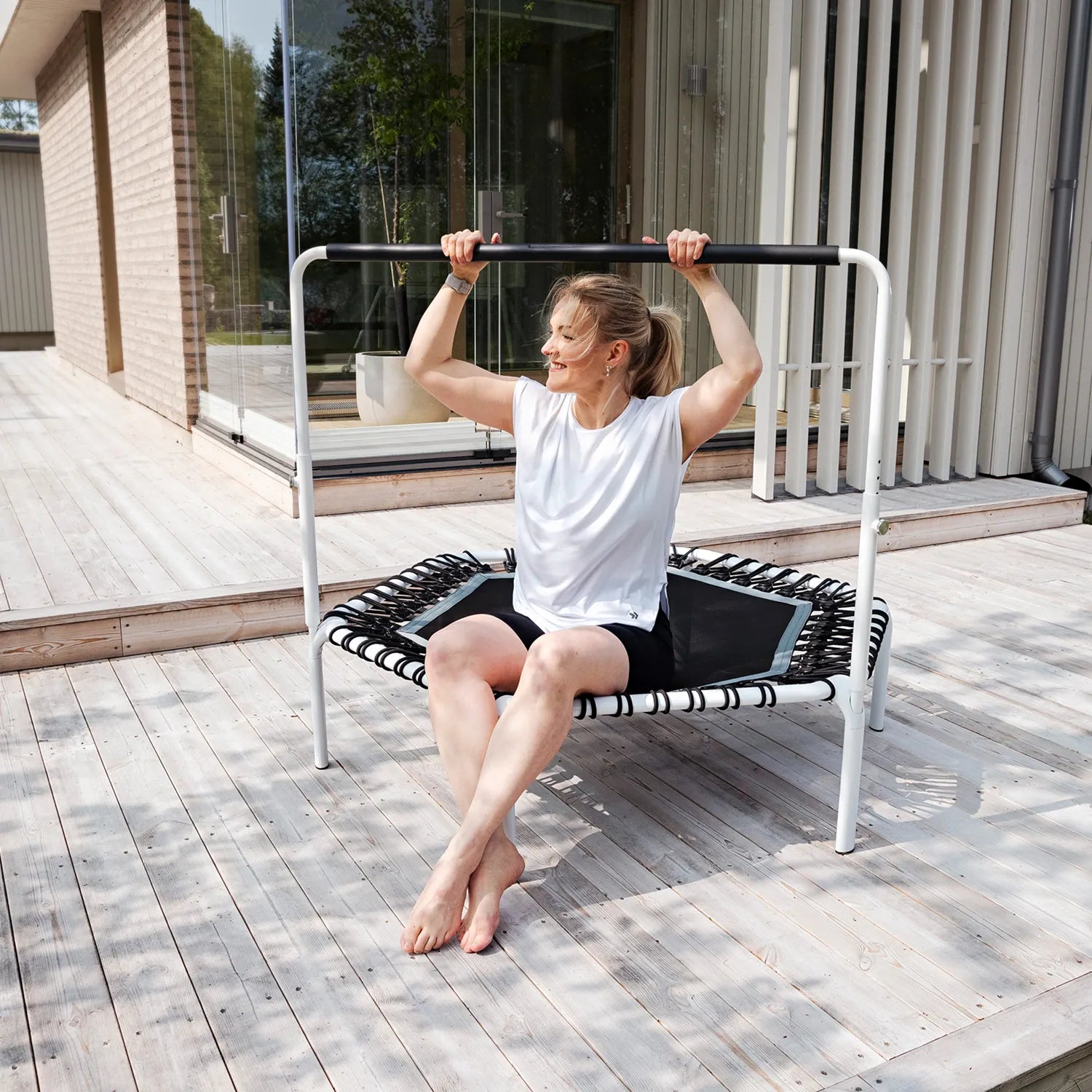
Hold a support bar if needed. Improves coordination and joint stability.
Cool Down (5 Minutes)
Gentle stretching for legs, back, and arms.
These exercises to strengthen bones should remain controlled and comfortable. The goal is stimulation, not strain.
Safety Tips for Rebounding With Osteoporosis
Safety should always come first when starting any new exercise to strengthen bones. Before beginning mini-trampoline training, it’s important to consult a healthcare provider to ensure the activity is appropriate for your individual condition.
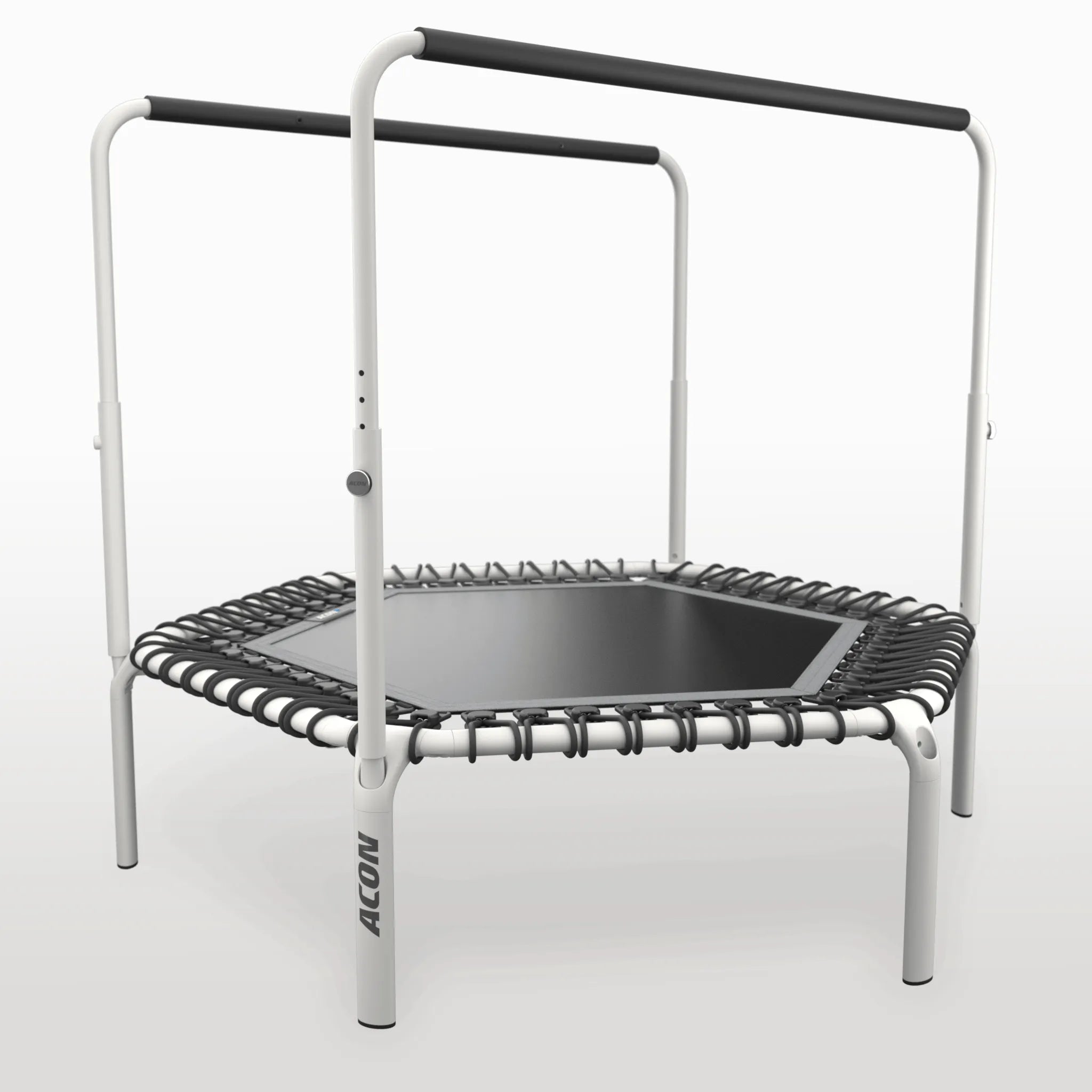
Using a trampoline with a sturdy support handlebar may provide additional stability, particularly for those who feel unsteady. The trampoline should be placed on a non-slip surface to prevent shifting during use, and wearing grip socks may further reduce slipping. Movements should remain low and controlled. High jumps or aggressive bouncing are generally not recommended for people at high risk of fracture or with a history of osteoporotic fractures.
Warming up for at least five minutes before each session may help prepare muscles and joints for activity. It’s also wise to increase intensity gradually. Starting with gentle rocking or marching in place allows the body to adapt safely. Some people prefer having another person nearby, especially during the first few sessions, for added peace of mind.
By approaching rebounding with care and attention to form, many people may find it to be a manageable and joint-friendly option. To recap, in order to reduce injury risk:
- Use a support handlebar for added stability
- Place the trampoline on a non-slip surface
- Wear grip socks
- Avoid high or aggressive jumping
- Do not train alone if you feel unsteady
- Increase intensity gradually
- A high-quality mini trampoline with a stable frame and durable mat is especially important for safety.
When Rebounding May Not Be Suitable
Although mini-trampoline exercise may benefit some individuals with osteoporosis, it is not appropriate for everyone. Those with severe or advanced osteoporosis, recent fractures, or acute spinal injuries may need to avoid rebounding altogether. In these cases, even gentle vertical movement could place stress on vulnerable areas.
Individuals with significant balance disorders may also find a trampoline challenging, even when using a handlebar. In such situations, exercises performed on a stable surface may be a safer alternative. Persistent back pain, particularly following vertebral fractures, should also be evaluated by a medical professional before starting any new training routine.
Because osteoporosis affects people differently, personalized medical guidance is essential. A healthcare provider can help determine whether rebounding fits safely into your overall bone health plan.
How to Choose a Mini Trampoline for Bone Health
Choosing the right mini-trampoline is an important part of exercising safely. A stable, high-quality frame provides a secure foundation and helps prevent unwanted movement during use. Look for solid construction and durable materials designed for consistent indoor training.
The jumping surface should be well-cushioned and responsive. A smooth, controlled bounce is preferable to a very stiff or overly springy feel, as it allows for gentle stimulation without excessive force. Suspension systems that distribute weight evenly may also contribute to a more comfortable experience.
For individuals with osteoporosis, a model that includes a support handlebar can add confidence and stability. Some mini trampolines, such as the Acon FIT, also offer the option of adding another handlebar, providing extra points of support for those who prefer additional support during gentle exercise. Non-slip feet are another useful feature, particularly for hardwood or tile floors. Overall, the goal is to select equipment that promotes controlled movement and reduces unnecessary strain on bones and joints.
A thoughtfully designed mini trampoline may provide a supportive environment for regular, low-impact training at home.
Conclusion: Does Exercise Strengthen Bones?
Yes. Regular, weight-bearing movement may help maintain bone density. For some individuals, rebounding offers a gentle alternative to higher-impact activities.
If performed carefully and under medical guidance, a mini trampoline may support balance, mobility, and safe daily movement. As a form of weight-bearing exercise, it may also contribute to an overall bone health plan.
Frequently Asked Questions
Is trampoline exercise safe for people with osteoporosis?
It may be appropriate when performed gently and with guidance from a healthcare provider. Using a support handlebar may provide additional stability for some people, and increasing intensity gradually is generally recommended.
How often should I rebound for bone health?
Many people begin with 2–3 sessions per week, allowing rest days between workouts.
Is trampoline good for osteoarthritis as well?
Gentle rebounding may be a suitable low-impact exercise for some people with osteoarthritis. However, individuals with osteoarthritis should consult a healthcare provider before starting to ensure it is appropriate for their specific condition.
Can rebounding replace walking for bone strength?
It may complement walking but should not replace medically recommended activity unless approved by a healthcare professional.


